
PCB Depaneling Machine Maintenance: Reduce Downtime with the Right Spare Parts Strategy
Table of Contents
Uptime strategy in one sentence
A spare-parts strategy reduces PCB depaneling downtime when it places the correct, compatible part near the machine before a credible failure, and when the plant also has the instructions, tools, access, trained people, and release checks needed to restore production. Stock value alone does not create readiness. Recovery capability does.
For a large manufacturer, we recommend managing depaneling spares through asset criticality, failure mode, supplier lead time, installed-base compatibility, and production loss exposure. This creates different policies for high-use consumables, predictable wear parts, repairable assemblies, and low-probability insurance spares.
Management rule: Buy recovery time, not shelves of parts. Every critical spare should have a known machine fit, storage condition, installation method, owner, and post-repair acceptance step.
Start with production-loss exposure
Rank the depaneling assets by what happens when they stop. Consider upstream line blockage, downstream starvation, product value at the separation step, qualified backup capacity, changeover to another machine, customer priority, and the time needed to recover. A standalone machine with a proven backup route may require a different stock policy from the only qualified in-line cell on a high-volume program.
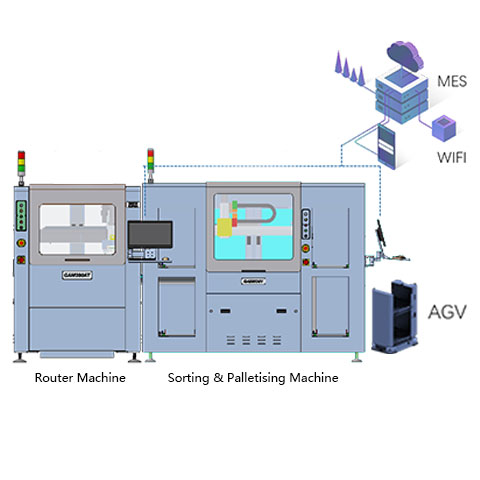
Map each asset from panel entry to finished-board exit: conveyor and sensors, barcode or vision, clamps or grippers, motion axes, spindle and collet, cutter, extraction, unloading, sorting and palletizing equipment, safety circuits, controller, software, and utilities. Failures often occur at interfaces, so the bill of materials should reflect the complete cell rather than the cutting machine alone.
| Spare class | Typical planning logic | Control requirement |
|---|---|---|
| Consumable | Frequent planned use tied to output | Validated life, min-max stock, approved revision |
| Wear part | Predictable degradation or preventive replacement | Condition or interval, replacement kit, work instruction |
| Operational critical | Failure stops or degrades production | On-site stock or guaranteed rapid response |
| Repairable assembly | Higher value with exchange or repair route | Rotable pool, return tracking, preservation |
| Insurance spare | Low probability but severe loss and long lead time | Management approval, periodic compatibility review |
Build the list from failure modes, not memory
Review maintenance history, alarms, tool consumption, supplier recommendations, and technician experience. For each subsystem, ask how it can fail, how the failure is detected, whether production can continue safely, what part restores function, what secondary damage is possible, and how long the replacement and verification take. Include intermittent faults, not only complete stops.
- Cutting system: router bits, collets, tool sensors, spindle service items, and approved spindle recovery options.
- Motion and transfer: belts, rollers, cylinders, grippers, bearings, couplings, motors, drives, and position sensors.
- Vision and identification: lighting, lenses or protective windows, cameras, barcode readers, cables, and calibration targets.
- Dust control: brushes or hoods, hoses, seals, filters, bins, differential-pressure items, and collector service components.
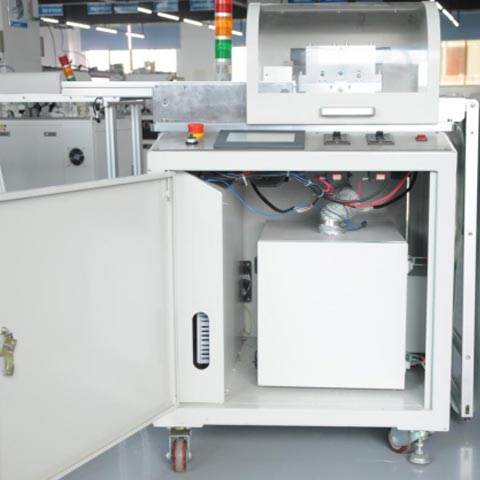
- Controls and safety: power supplies, relays, switches, industrial computers, controller backups, safety devices, and compatible software images.
- Product-specific hardware: fixtures, nests, support pins, clamps, change parts, tray interfaces, and validated replacement documentation.
Use the equipment configuration as the master reference. Parts for a standalone bottom-cut pcb router may not be interchangeable with those for an in-line automatic pcb separator, even when they look similar. Record machine model, serial range, electrical or mechanical revision, firmware dependencies, and supplier confirmation.
Set stock policy by criticality and lead time
A practical policy combines expected usage, replenishment lead time, failure consequence, detectability, shelf life, and alternative recovery. Consumables need a usage-based reorder rule. Long-lead insurance spares need an exposure decision. Repairable assemblies need a return and rotation process. Obsolete parts need a lifecycle plan before the supplier stops supporting them.
| Decision question | Why it matters | Required evidence |
|---|---|---|
| Will the failure stop qualified production? | Defines consequence | Line and backup-capacity map |
| How early can deterioration be detected? | Creates time to order or schedule work | Inspection, alarm, or condition trend |
| What is the verified replenishment time? | Sets coverage requirement | Supplier commitment and transport route |
| Can another machine or method run the product? | Reduces exposure if genuinely qualified | Approved contingency and changeover time |
| Does the part expire or degrade in storage? | Prevents false readiness | Storage and shelf-life requirement |
| Can the item be repaired or exchanged? | Changes inventory economics | Repair lead time, warranty, and return process |
For high-use items, calculate coverage from actual consumption under the expected production plan, then include lead-time variability and approved safety stock. For low-use critical items, the decision is closer to risk insurance: compare carrying cost with the expected production exposure and the credibility of alternatives. Document who approved the risk.
Create machine-ready recovery kits
A part in a central store may still leave the machine down while technicians search for fasteners, cables, seals, tools, settings, or the correct procedure. Package common planned interventions as controlled kits. The kit should contain approved parts and consumables, special tools, safety steps, replacement instructions, settings or backup references, and the post-maintenance verification checklist.
Router recovery often involves more than a cutter. Review the applicable pcb depaneling accessories, including collets, dust brushes, extraction items, fixtures, and detection components. Keep clean precision parts protected from dust and corrosion. Label opened kits and return unused controlled items through inspection rather than placing them loosely back into stock.
Control software and data as spares
Recipes, machine parameters, controller images, vision files, licenses, network settings, and interface configurations can determine recovery time as much as hardware. Maintain verified backups with revision, machine identity, restore instructions, access control, and periodic recovery tests. A file that has never been restored is an assumption, not a recovery plan.
Link preventive maintenance to spare demand
Preventive maintenance should generate planned spare consumption and condition information. If extraction filters, belts, seals, collets, or brushes have defined service triggers, the maintenance schedule can reserve parts before the shutdown. Findings from inspections should update the criticality and stocking model.
Dust-control parts deserve specific attention because capture depends on the entire air path. Donaldson describes source capture, ducting, fan, filters, and containment as parts of one dust collection system. In PCB routing, a damaged brush, leaking hose, loaded filter, poor seal, or full bin can reduce capture even when the collector motor still runs. Stock and inspect the weak points relevant to the installed configuration.
When spindle condition changes, use the equipment supplier’s procedure and limits. General spindle guidance emphasizes clean interfaces and defined runout measurement, but a PCB router requires its own approved method. Do not turn a precision repair into a trial-and-error replacement during a production stop.
Write supplier support into the recovery design
Ask the equipment supplier for a recommended spare-parts list by machine configuration, identified wear items, critical assemblies, normal lead times, obsolescence notice process, repair options, remote diagnostic requirements, and field-service coverage. Confirm whether installing a part requires special training, software authorization, calibration, or supplier release.
- Part number, description, drawing or photo where useful, and approved manufacturer.
- Compatible machine models, serial ranges, options, voltage, firmware, and mechanical revision.
- Recommended quantity by production pattern and installed base.
- Current lead time, repair route, warranty, exchange program, and escalation contact.
- Storage temperature, humidity, cleanliness, preservation, shelf life, and inspection interval.
- Installation procedure, special tools, torque or alignment requirements, software steps, and safety controls.
- Functional test, calibration, first-piece inspection, and documentation required before release.
Review support across the complete pcb depaneling machine portfolio if the site operates multiple technologies. Consolidation can lower inventory only when compatibility is verified. A shared shelf label does not make parts interchangeable.
Test the recovery plan before the breakdown
Use planned maintenance or a controlled drill to test critical recovery paths. Confirm the part can be located, issued, installed, configured, and verified by the assigned team within the expected time. Record missing tools, outdated instructions, access problems, incompatible revisions, and delays in product release. Correct them while production is controlled.
- Select a credible high-impact failure or planned replacement.
- Confirm the machine state, product containment, lockout, and authorized roles.
- Locate the exact spare and verify model, serial, revision, shelf condition, and documentation.
- Perform the approved replacement and restore settings or backups where required.
- Complete safety, function, alignment, extraction, and alarm checks.
- Run and inspect a controlled first piece using the defined acceptance method.
- Record elapsed time by stage and close gaps in stock, access, training, or procedure.
Use metrics that reveal readiness
Track downtime by failure mode, mean time to repair, time spent waiting for parts, emergency purchases, stockouts, obsolete inventory, repair turnaround, planned versus unplanned part use, and repeat failures after replacement. Segment the metrics by machine family and production consequence. A low overall stockout rate can hide one critical part that repeatedly stops the only qualified cell.
Review the spare strategy when equipment is added, relocated, modified, or retired; when production volume changes; when suppliers change lead time; and when repeated failures show that a stocked part is treating a symptom. The best inventory policy changes with the plant. It should not remain frozen at the machine’s installation date.
When the installed machine architecture no longer meets the recovery or capacity requirement, compare available automatic depaneling equipment rather than continually increasing spare stock around an obsolete constraint. Parts strategy supports a capable process; it cannot make an unsuitable process architecture competitive forever.
FAQ
Which spare parts should a PCB depaneling plant hold on site?
Hold items according to failure impact, probability, detection, supplier lead time, shelf life, repair options, and installed base. Typical candidates include approved cutting consumables, collets, extraction wear items, sensors, belts, and model-specific critical components.
How can a factory avoid buying too many spares?
Use a criticality model, consolidate compatible equipment, set min-max rules from actual use and lead time, review slow-moving stock, and distinguish consumables from insurance spares.
What information should be recorded for every critical spare?
Record the manufacturer part number, description, compatible machine models and serial ranges, revision, storage requirements, quantity, lead time, supplier, shelf life, replacement procedure, and post-repair verification.
How should maintenance verify a machine after a spare-part replacement?
Follow the approved installation procedure, restore settings or backups, complete safety and functional checks, inspect a controlled first piece, and document the result before production release.