
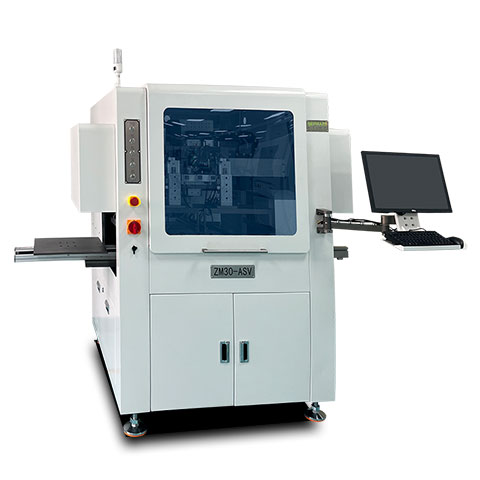
v-groove pcb depaneling for led production: how to maximize output at the lowest total cost
If your led boards already use straight v-score lines, v-groove pcb depaneling is usually the fastest and most cost-friendly way to separate them. In our experience, it works best when the board shape is simple, the v-cut depth is controlled, and the components stay away from the separation line. You get high output, low tooling cost, clean straight cuts, and easier operator training.
That does not mean v-groove is always the right answer. If your led pcb has a complex outline, dense components close to the edge, thin flex areas, or very strict stress limits, you may need a pcb router machine or a laser depaneling machine. But for long led strips, light bars, aluminum led boards, and high-volume straight-line separation, a v-groove saw depaneling setup often gives the lowest total cost.
PCB depaneling is the step where a panel becomes individual boards. It can happen after SMT, testing, through-hole soldering, or right before final assembly. Public manufacturing references describe the main depaneling methods as hand break, v-cut, punch, router, saw, and laser, each with a different balance of stress, tolerance, speed, dust, and cost.
Why v-groove pcb depaneling fits led production
Led production loves repeatability. Many led boards use long, straight layouts: light strips, linear modules, signage boards, backlight boards, and aluminum substrate boards. When the product design already supports v-scoring, it makes little sense to pay for a more complex cutting process unless the board risk demands it.
Here is the practical reason. A v-groove machine follows a pre-scored line. It does not need to mill a full contour like a router. It does not need custom punch tooling. It does not need the higher capital cost of laser cutting. For a production manager, that means a simpler equation: stable line speed, lower consumable cost, and fewer process variables.
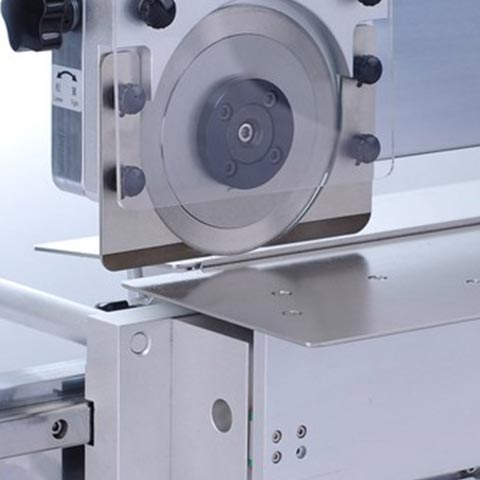
We normally recommend v-groove depaneling when three things are true:
| Check point | Good fit for v-groove | Warning sign |
|---|---|---|
| Board outline | Straight separation lines | Curves, tabs, or irregular shapes |
| Product volume | Medium to high repeat orders | Very high mix with changing shapes |
| Component layout | Parts kept away from score line | BGA, ceramic capacitors, or connectors too close to edge |
| Quality target | Clean straight edge, low cost per board | Zero mechanical stress requirement |
| Material | FR-4, aluminum pcb, led light bar pcb | Very thin flex or fragile hybrid stack |
The keyword is fit. A cheap process used in the wrong place becomes expensive very quickly.
What led manufacturers care about most: output, edge quality, and total cost
When led factories ask us about depaneling, they rarely start with theory. They ask simple questions:
Will it crack the board? Will the edge look clean? Can one operator run it all day? How many panels can we finish per shift? What will the blade cost us every month?
In led production, the visible product often sits close to the pcb edge. A rough edge can affect assembly, housing fit, and customer perception. More important, mechanical stress can travel through the panel during separation. Depaneling references warn that mechanical strain can bend the pcb and may crack components or traces. MLCC and pad cratering references also connect board flexure and depaneling with latent reliability failures.
So the real goal is not simply “buy a low-cost machine.” The goal is lowest cost per good board.
That cost includes:
| Cost item | Why it matters |
|---|---|
| Machine price | The upfront budget matters, especially for small and mid-size factories. |
| Blade or tool wear | Consumables affect monthly cost. |
| Labor | Manual breaking looks cheap until output changes by operator. |
| Scrap | One cracked board can cost more than many minutes of machine time. |
| Rework | Rework hides inside the production report and steals margin. |
| Downtime | A line waiting for depaneling loses output fast. |
This is why many factories move from hand breaking to a guided v-cut separator first. They want better repeatability without jumping straight into a high-end inline system.
v-groove depaneling vs router, laser, and punching for led boards
The best depaneling method depends on board design. We usually compare four options before recommending a setup.
v-groove depaneling
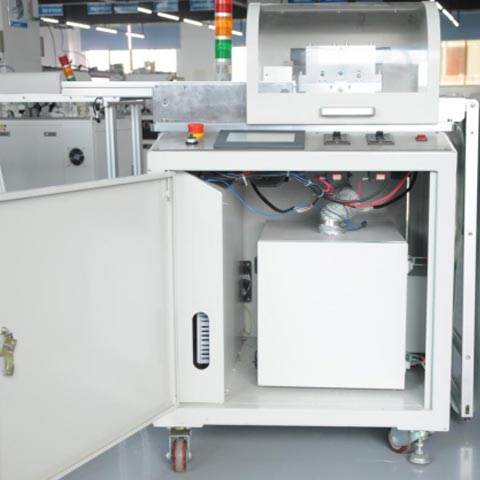
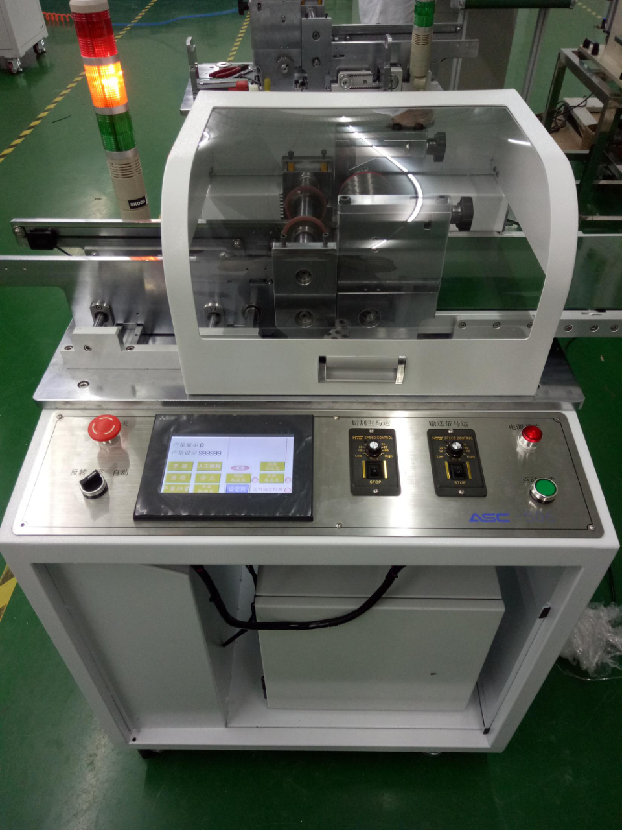
Choose v-groove depaneling when the pcb has pre-scored straight lines and the main target is output at low cost. It is simple, fast, and easy to train. A saw-style v-groove system can cut v-grooved boards at high feed rates and creates less dust than routing because it removes less material. For led boards, this is often the sweet spot.
pcb router machine
Use a pcb router machine when the led board has tabs, curves, slots, or complex shapes. Routing gives more shape flexibility, but it also creates dust and needs tool management. Public depaneling references note that routers use bits, require tight fixturing or vacuum holding, and involve feed-rate and spindle-speed control.
Router is a good fit for mixed SKUs. It is not always the lowest-cost answer for long straight led strips.
laser depaneling machine
Use a laser depaneling machine when stress matters more than price. UV laser cutting can handle FR-4, polyimide, ceramics, PTFE, PET, aluminum, brass, and copper, with very fine cut widths and high repeat accuracy.
For high-density led modules, flex led boards, or boards with sensitive components near the edge, laser can protect yield. The tradeoff is higher investment.
punching machine
A pcb/fpc punching machine works well for high-volume fixed products where a dedicated die makes sense. It can be fast, but the tooling cost and product-change cost are higher. If your led factory runs one stable design for a long time, it can make sense. If designs change often, be careful.
automatic equipment
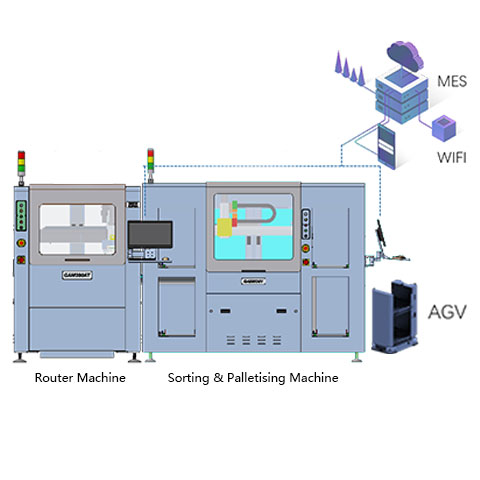
When the process becomes the bottleneck, look at automatic loading, unloading, sorting, or inline depaneling. Automation does not magically fix a bad cutting process. It makes a stable process faster and easier to control.
How to calculate the real cost per panel
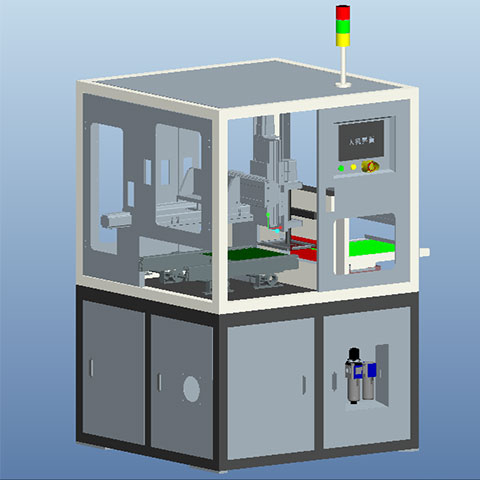
I like to start with a simple question: how much does one good separated led board cost?
Use this quick model:
Cost per good board = machine cost per board + labor cost per board + blade/tool cost per board + scrap cost + rework cost + downtime cost.
Here is a practical example.
A factory separates led light-bar panels by hand. One operator can finish about 450 panels per shift. The reject rate from edge cracks and unstable bending is 1.8%. After switching to a guided v-groove separator, the same operator finishes 900 panels per shift and reject rate drops to 0.6%. These numbers are not a universal promise. They are a realistic shop-floor pattern we see when the old process depends too much on hand force and operator feel.
The machine did not just “cut faster.” It removed variation. That is where the money hides.
When you compare equipment, ask suppliers for:
- Gamme de tailles de planches
- Supported v-score depth
- Maximum panel thickness
- Blade type and life estimate
- Edge burr control method
- Fixture or guide design
- Operator safety design
- Maintenance interval
- Changeover time
Then compare cost per good board, not only equipment price.
Best practices for setting up v-cut led pcb depaneling
Keep sensitive parts away from the score line
Do this in design review, not after mass production starts. Public references warn that depaneling strain can bend the pcb and damage components or traces. MLCCs are especially vulnerable to flex cracking, and pad cratering can appear after board flexure events such as depaneling.
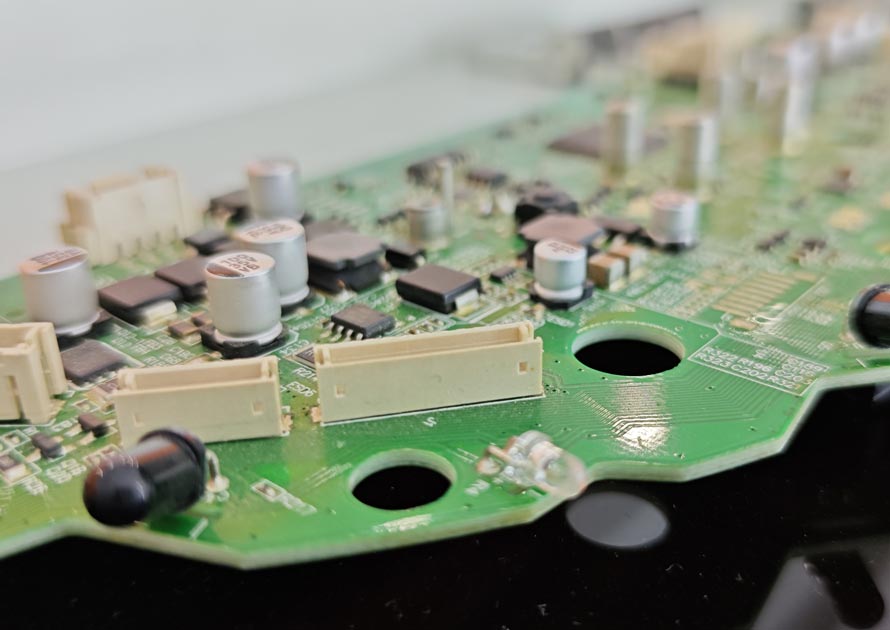
As a working rule, we ask the customer to flag ceramic capacitors, BGA packages, connectors, and heavy components near the v-score. If parts sit too close, we either adjust the process, add support, or recommend a lower-stress method.
Control v-score depth before tuning the machine
A v-groove machine cannot save a bad score. If the remaining web is too thick, the board needs more force. If it is too thin, the panel may warp, crack, or break during handling.
Before machine testing, measure the score depth across the panel. Check both ends and the middle. Led boards can be long, and small scoring variation becomes obvious during separation.
Support the board during the cut
Aluminum led boards feel strong, but they can still transfer force into solder joints and components. Good support keeps the separation line stable and prevents the operator from twisting the panel. For long led strips, guide alignment matters as much as blade sharpness.
Track blade condition
A dull blade does not always fail suddenly. It slowly adds burrs, heat, noise, and stress. That is worse because operators get used to the decline. Add blade checks to the daily routine. If your edge quality changes by shift, start with the blade and fixture before blaming the machine.
Common problems and how we solve them on the production floor
Problem: cracked led boards after separation
First, we check the v-score depth and component location. Then we watch the operator’s hand motion. If the board twists before the cut, the process is already unstable. We add better support, correct the guide, reduce unnecessary bending, and test again.
If cracks continue, the board may not be a good v-groove candidate. That is when a router or laser discussion becomes serious.
Problem: burrs on the led pcb edge
Burrs often come from blade wear, poor score quality, or wrong feed condition. Replace or sharpen the blade, inspect the v-score, and check whether the panel moves during cutting. Do not keep increasing force. That usually creates a new problem.
Problem: output looks good in testing but not in mass production
Short trials can lie. We prefer a longer run with real operators, real panels, and normal shift conditions. Check edge quality at the start, middle, and end of the shift. Also record scrap by cause, not just total scrap.
Problem: one machine cannot handle all products
This is common. A led factory may have straight light bars, compact driver boards, aluminum panels, and flexible led modules. In that case, one v-groove machine may cover the high-volume straight products, while a router or laser covers the complex or sensitive products. A mixed process can cost less than forcing one machine to do everything.
When to upgrade from manual splitting to semi-automatic or inline equipment
Manual splitting can work for prototypes and very simple boards. It becomes risky when output grows or quality requirements rise.
Upgrade when you see any of these signs:
- Operators need different force to split the same panel
- Cracks appear near connectors or ceramic capacitors
- Edge burrs change from shift to shift
- Depaneling becomes the bottleneck after SMT
- Customers tighten cosmetic or reliability standards
- You need traceable, repeatable production data
For a small factory, a semi-automatic v-groove separator may be enough. For a larger SMT line, inline integration can reduce handling, stabilize takt time, and lower labor dependence. SEPRAYS also provides smt whole line equipment support when customers need front and rear loading, unloading, and line-level matching.
Example setup for an led lighting production line
Let’s say a factory makes aluminum led light-bar pcb panels. The boards are long, the separation lines are straight, and the customer wants lower cost without adding another operator.
We would normally start like this:
- Review gerber and panel drawing.
- Confirm material, thickness, v-score angle, and remaining web.
- Mark all sensitive components near the score line.
- Run sample panels with the planned guide and blade.
- Inspect edge burr, board bending, solder joints, and cosmetic quality.
- Measure output over a realistic batch, not a five-minute demo.
- Set daily blade and fixture checks.
If the sample passes, v-groove depaneling is probably the right first choice. If the sample shows stress marks or component risk, we compare router and laser before the customer spends money in the wrong place.
That is the experience-based way to choose equipment. Start with the board, not the catalog.
Quick selection guide
| Production need | Best starting method |
|---|---|
| Straight led light bars, high output, low cost | v-groove depaneling |
| Complex board outline or tab-routing | pcb router machine |
| Dense components, flex, high reliability, zero-stress target | laser depaneling machine |
| Stable high-volume fixed shape | punching machine |
| SMT line bottleneck and labor reduction | inline or automatic equipment |
FAQ
is v-groove pcb depaneling good for led production?
Yes, it is a strong choice when the led pcb has straight v-score lines, stable material thickness, and enough clearance from sensitive components. It gives high output and low cost per separated board.
when should i avoid v-groove depaneling?
Avoid it when the board has complex curves, dense components close to the edge, fragile flex areas, or a strict zero-stress requirement. In those cases, router or laser depaneling may protect yield better.
does v-cut depaneling damage led pcb components?
It can if the board bends too much or if sensitive parts sit too close to the v-score. Good score depth, stable support, sharp blades, and proper component clearance reduce that risk.
is v-groove cheaper than laser depaneling?
Usually yes for straight, pre-scored led boards. Laser costs more upfront, but it may save money when stress-related scrap is expensive or the board is too sensitive for mechanical cutting.
what should i check before buying a v-groove pcb depaneling machine?
Check board thickness, v-score depth, supported panel size, blade life, edge quality, fixture support, changeover time, operator safety, and whether the supplier can test your real panels before purchase.